
How to Hold the Line on Client Project Scope Without Hurting the Relationship
Project scope creep threatens timelines, budgets, and client satisfaction, yet many professionals struggle to enforce boundaries without damaging relationships. This guide draws on insights from industry experts who have mastered the balance between flexibility and firm project management. The twelve strategies outlined below provide practical methods to protect scope while keeping clients engaged and satisfied.
- Use A Fast One Page Change Order
- Front Load Upgrades With 3D Visualization
- Prioritize Infrastructure With A System Led Plan
- Price Attention And Set Office Hours
- Add A 24 Hour Decision Pause
- Require Sponsor Signoff For Post Kickoff Adjustments
- Enforce A Weather First Installation Sequence
- Run A 10 Minute Bottleneck Diagnostic
- Lead With ROI Plus Retainer Alignment
- Tie Effort To CRM Driven Revenue Paths
- Split Work Into Parallel Sprints
- Assign A Single Daily Liaison
Use A Fast One Page Change Order
The single process that changed how scope conversations went in our agency work was a lightweight written change-order step, triggered the moment any request fell outside the original SOW. Not a contract amendment, not a legal document — a one-page note with three lines: what’s being added, what it costs in hours and dollars, and what it pushes back on the existing timeline.
The shift is psychological. Before we used it, every new request felt like a negotiation where saying “that’s out of scope” sounded like we were protecting ourselves. After, the same conversation became a trade-off the client controlled. They could approve, decline, or swap the new request for something already in scope. We weren’t the gatekeeper anymore — the document was.
Real example: a SaaS client we were running organic growth for kept layering on landing page requests mid-sprint, each one “small.” By week six we were three deliverables behind on the technical work that actually moved rankings. We introduced the change-order step the next Monday. First new request came in Wednesday — a competitor comparison page. We sent the note: 12 hours, $X, pushes the schema rollout to the following sprint. They came back in an hour and said skip it, keep the schema work. That was the moment the dynamic reset.
What changed in their behavior: requests dropped by roughly half within a month, and the ones that did come through were better thought out because the client had already weighed them internally before sending. The relationship got stronger, not weaker, because every “no” was now their own decision, not ours.
The change order isn’t a wall. It’s a mirror that shows the client exactly what their new idea costs in time and money before they’re committed to it.
One caveat: this only works if you respond fast — same day, ideally within hours. If the change-order note becomes a bottleneck itself, clients start routing around it, and you’re back to scope creep with extra paperwork.

Front Load Upgrades With 3D Visualization
After 30 years in exterior home improvement, I’ve watched “just one more thing” quietly blow up more projects than bad weather ever has. The pattern is always the same—a gutter job becomes a fascia replacement, which becomes a siding conversation, which becomes a full exterior overhaul.
What actually worked for us was building that expansion expectation into the first conversation. We use 3D visualization through HOVER early on, so clients can literally see the full picture of their home before anything is signed. When they can see everything at once, the add-ons get front-loaded into the original scope instead of trickling in mid-project.
The relationship stays strong because the client never feels like they’re being shut down—they feel heard. Our estimators like Dave Harris and Mack Schledorn are trained to ask “what else is bothering you about your exterior?” right at the start. That one question surfaces the hidden wish list before it becomes a disruption.
The honest truth is we built our whole company model around being the one contractor who owns the full exterior—gutters, roofing, siding, windows. When one team handles everything, scope creep stops being a threat and starts being a sales conversation you already planned for.

Prioritize Infrastructure With A System Led Plan
I’ve spent my career in the field and as a founder, managing everything from HVAC replacements to complex smart home integrations across Santa Barbara and SLO Counties. My focus is on creating a transparent customer experience that removes pressure and eliminates surprise costs during the service process.
To protect timelines and budgets when scope expands, I use a “System-First Consultation” where we communicate all repair and replacement options clearly before any work begins. This allows us to discuss how adding a Google Nest device or an EV charger affects the home’s existing infrastructure, such as an undersized electrical panel.
A specific boundary that works for me is the “Infrastructure Load Check,” particularly in mid-century homes where original 60-amp panels are common. In one project, I had to show a client that their request for more technology would compromise safety, leading us to prioritize a panel upgrade to ensure a permanent, code-compliant fix.
This approach keeps the relationship strong by shifting the focus from “no” to a conversation about long-term home performance and safety. It ensures the homeowner understands the “why” behind budget adjustments before any additional labor or parts are committed.

Price Attention And Set Office Hours
We protect the budget by pricing attention, not just deliverables. Many overruns are caused less by major features and more by constant context switching. Once that hidden cost is made visible, clients understand why small requests can add up so quickly. The relationship stays strong because the logic feels fair, clear, and transparent.
In one multichannel growth engagement, office hours became the turning point. The client was given a fixed weekly block for questions and smaller requests. Anything beyond that block was moved into separately scoped work with updated estimates. That boundary reduced interruptions, protected delivery rhythm, and still made the service feel highly responsive.

Add A 24 Hour Decision Pause
The most effective boundary in a real engagement was a 24 hour cooling period for requests that appeared after approval. A client in a highly competitive market kept adding ideas late in the process, usually right after seeing early progress. None of the requests were unreasonable, but acting on them immediately would have pushed the schedule off course. I created a simple rule that any new ask would be documented, then reviewed the next day against the original objective, timeline, and ownership.
That pause made a surprising difference. It filtered out impulse decisions without making the client feel ignored. Most add ons lost urgency by the next morning, and the few that still mattered were easier to evaluate against real priorities. The relationship stayed strong because the process respected their input while protecting the project from emotional decision making in the moment.

Require Sponsor Signoff For Post Kickoff Adjustments
One of the best boundaries we have used is asking for sponsor approval for any request that changes the scope after kickoff. We do not do this to create friction but to make sure new work is reviewed with care. Extra tasks often seem small to the team asking for them but they can affect time and focus. When a senior stakeholder reviews the impact the team usually gains a clearer view of what matters most.
In one project this single step changed the tone of the work. Midway through the engagement new requests were coming in from different teams and pulling us away from the plan. We asked that every added request go through one executive owner with short notes on impact. After that the number of requests dropped and the remaining ones were more thoughtful.

Enforce A Weather First Installation Sequence
With 18 years of experience and AAMA Installation Masters Program certification, I protect timelines by emphasizing the technical physics of a high-performance installation. I explain that windows and doors aren’t just “plug and play” but rely on specific sealants and spacers that require controlled conditions to prevent future cracks.
My primary boundary is the “Weather-Proofing Sequence,” which is critical in Colorado Springs where snow and ice can quickly damage an open frame. When clients want to add tasks mid-job, I show how a rushed installation in freezing temperatures prevents adhesives from bonding, leading to moisture leaks and drafts.
In a real engagement involving a new sliding glass door with built-in blinds, I protected the budget by sticking to the initial structural “Inspect and Measure” data. I explained that changing door types mid-stream would compromise the frame’s level, choosing the door’s long-term performance over a quick but flawed project expansion.

Run A 10 Minute Bottleneck Diagnostic
I’ve led Impress Computers since 1993, helping Houston firms in construction and engineering avoid the “bad date” version of IT support where silence and excuses replace actual progress. I protect timelines by ensuring technology remains “boringly reliable” so that every new request is measured against its impact on our 99.9% uptime and 15-minute response guarantees.
One process that works is performing a “10-Minute Bottleneck Diagnostic” whenever scope expands, asking the team which tools are currently making their jobs harder than they need to be. For engineering clients, this reveals if adding more AutoCAD or BIM users will crash the license server or create productivity-killing “dead zones” in the network.
I use modular service bundles to scale infrastructure like cloud workstations or offsite backups without forcing a complete budget overhaul. This keeps the relationship strong by preventing the “Workaround Trap” where employees use unsafe methods to share data because the official systems are too slow to adapt to the new project needs.

Lead With ROI Plus Retainer Alignment
I’ve managed over $100M in ad spend and driven $1B in client revenue by focusing strictly on performance-first strategies rather than vanity metrics. Our agency uses a fixed retainer-based pricing model to align our incentives with the client’s bottom line instead of billing for extra hours or a percentage of spend.
We protect projects through a “Before We Start” research phase, where we only move forward if we can prove a positive ROI based on market profitability. This data-backed roadmap serves as a permanent boundary, allowing us to evaluate every new request against whether it will actually improve the conversion path we already defined.
For a personal injury law firm we overhauled, we used 24/7 live reporting dashboards to maintain focus on their 67% lift in case intakes. When a client has transparent, real-time access to the metrics that actually drive their revenue, they are far less likely to suggest distracting requests that might derail the project’s success.

Tie Effort To CRM Driven Revenue Paths
With over 25 years leading CC&A Strategic Media, I rely on marketing psychology and data integration to keep projects from drifting. My agency uses a holistic approach rooted in sales data to ensure every new request serves the client’s ultimate goal of sustainable business growth.
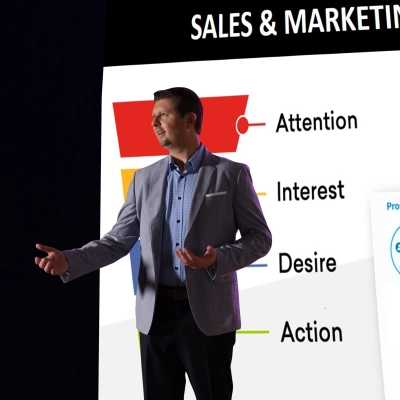
The primary boundary I use is a rigorous CRM integration process using tools like HubSpot or Marketo. By mapping every request to specific sales funnels and campaign opportunities within the database, I can show the client exactly how a new task affects the established lead-close ratios and budget.
In an engagement for a service-based website, we implemented a software integration that automatically unified data requests for things like client testimonials and service hours. This automation meant that when the client wanted to expand their offerings, we simply updated organized databases rather than redesigning site pages, protecting both the timeline and the budget.
Split Work Into Parallel Sprints
When a client keeps adding requests, I protect the timeline and budget by running parallel sprints and aligning the team and client around shared weekly outcomes. In one engagement we organized strategy, design, and client communication to run in parallel so new requests could be absorbed without stopping active work. Our boundary was that only items agreed into the active sprint would be executed immediately, and other requests were scheduled into the next sprint cycle. We used regular touchpoints to communicate trade-offs and timing so the client understood the impact on scope and schedule and felt included in decisions.

Assign A Single Daily Liaison
In my team, the first few weeks focus on clarity and connection. One practice that worked well was assigning a dedicated point of contact for daily check-ins. That builds trust quickly and reduces uncertainty. It also accelerates learning and integration.